Sacroiliac Joint Dysfunction Treatment
Up To 90% Success Rate
Specialist Sacroiliac Joint Dysfunction Treatment London
Sacroiliac joint dysfunction happens when there is uncharacteristic movement affecting the sacroiliac joint. The joint is at the base of your spine, sitting just above the coccyx. Unlike many joints in the rest of the body, the sacroiliac joint doesujn’t provide much movement, instead acting as a shock absorber for the upper body.
Sacroiliac joint dysfunction is usually a secondary issue, meaning there’s usually a different underlying condition that must be solved in order to fix sacroiliac dysfunction.
Causes of Sacroiliac Joint Dysfunction
There are lots of possible causes of sacroiliac joint dysfunction, including:
- Misalignment in the lower back (lumbar spine)
- Overuse of the joint
- Stretching of tissue from pregnancy
- Leg length asymmetry
- Ankle or knee dysfunction
- Biomechanical abnormalities
Symptoms of Sacroiliac Joint Dysfunction
Pain linked to the sacroiliac joint is often confused with a lumbar injury or sciatica because the symptoms are similar. That’s why a full examination is needed to find out exactly where the problem is. Patients with sacroiliac joint dysfunction tend to experience:
- Pain or ache, in the buttock, groin or side of the upper calf
- Unlike many other conditions, SI dysfunction generally causes no tingling or weakness
- Headaches
- Hip or lower back pain
Our Sacroiliac Joint Dysfunction Treatments
Our first priority is to find the true cause of your sacroiliac dysfunction. During your consultation with ProBack Clinics, we will carry out a thorough examination so we know the full extent of your condition. After which, we will recommend the best treatment plan tailored to your needs.
- In general, sacroiliac dysfunction can be treated using either shockwave or laser therapy, depending on how severe your case is. However, as mentioned earlier, sacroiliac joint dysfunction usually happens as a result of an issue in another area of the body. Any other problem would also need to be addressed to give you real, long term relief from sacroiliac dysfunction.
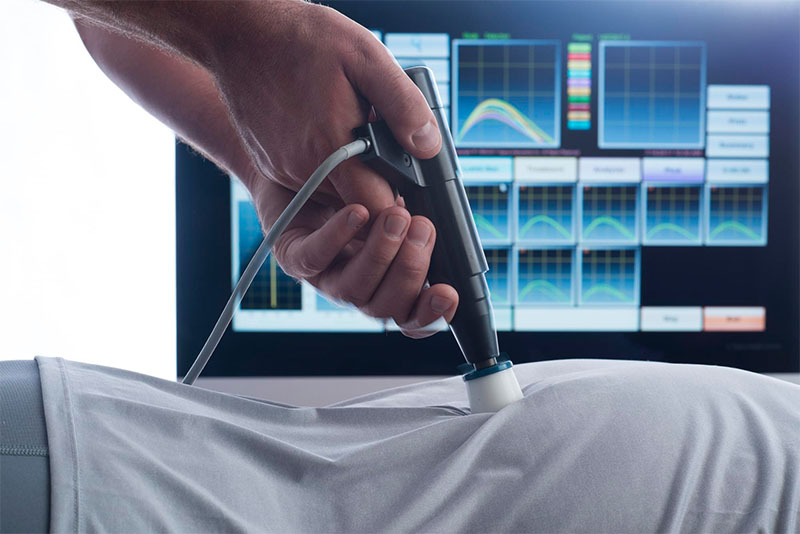
- With shockwave therapy, a percussive tapping motion is used to improve the function of the lumbar spine and hip. The tapping motion helps blood flow into the treated area and can help break down scar tissue, which may build up in an injured area.
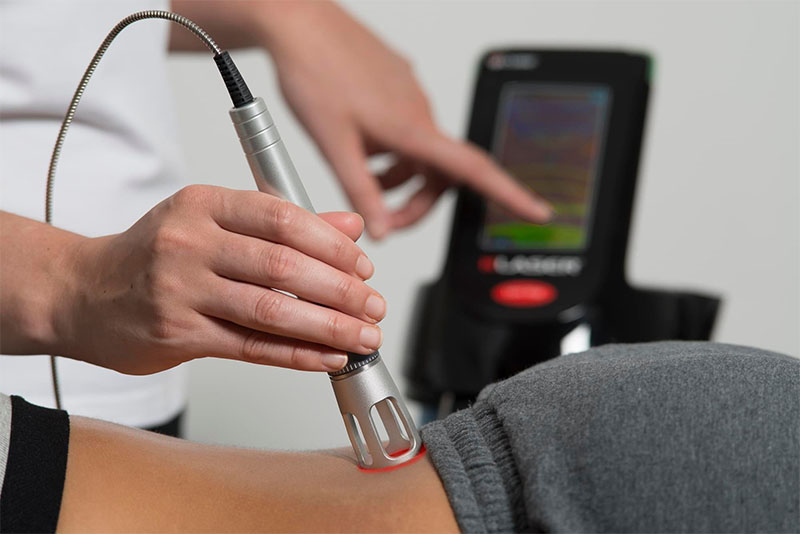
- In cases where the tissue has been stretched or damaged by sacroiliac joint dysfunction, using the laser therapy can help kick start healing in the injured area. The K Laser is an innovative light therapy device that is able to boost the body’s natural healing abilities. By targeting the injured area at a cellular level using light energy, this energy increases a cell’s ability to heal and regenerate without any tissue damage or side effects. This process can also help in the redevelopment of blood vessels in the area (a process called neovascularisation), This allows for an increased blood flow, to improve the body’s natural regenerative abilities.

FAQs
Sacroiliac joint dysfunction is pain associated with the sacroiliac joint. Sacroiliac dysfunction is usually a secondary issue, meaning there is likely a different root cause of the problem that will need to be resolved to relieve pain in the long term. Sacroiliac joint dysfunction can also be known as sacroiliac syndrome or sacroiliac joint disorder.
There can be many different causes of sacroiliac joint dysfunction, including lower back misalignment, leg length asymmetry, ankle or knee problems. The condition can also happen after pregnancy, as a result of stretched or damaged tissue.
Finding out if there is a different condition causing sacroiliac joint dysfunction is important if you want to resolve the issue in the long term. In treating sacroiliac dysfunction, shockwave therapy or laser therapy can be used. Shockwave therapy helps improve the function of the lumbar spine, if misalignment in this area is causing the problem. Laser therapy can help in cases where tissue has been stretched or damaged. The light energy distributed by the K Laser on a specific area can help generate cell activity, improving the cell’s ability to heal.
We advise that if there’s an underlying cause of sacroiliac joint dysfunction, that this be discovered and addressed before beginning exercises, to prevent the condition being made worse. Usually, we will recommend specific exercises for each patient, as each case will be completely individual to them. This will traditionally be done after the patient has started their treatment, and usually around six to twelve treatments down the line.
Award-Winning Treatments
Gentle Non-Surgical Chiropractic Therapy


Patient Stories
9/10 Recommend Us


SYMPTOMS
Back Pain

TREATMENT
Radial Shockwave Therapy
K-Laser Therapy
Vladimir’s story started with knee pain. He had experienced this for a number of years alongside an underlying back problem. After surgeries and multiple injections to his knee with no relief, his back pain only got worse. This forced Vladimir to stop working and spiral into depression.
Inside Proback
5 Minutes From London Victoria Station









Accreditations



How To Find Us
Flat 4, Evelyn Mansions,
Carlisle Place, Westminster,
London, SW1P 1NH
Opening Times
Weekdays 8.30am - 8pm
Saturday 9am - 3pm

020 7976 6648